From Puerto Varas to the World: Interview with Manuel Rozas, CSO of Kura Biotech
Interviewed and written by Diego Munoz (Americas Representative of iGEM Startups). Edited by Camila Quinonez (Head Representative of iGEM Startups).
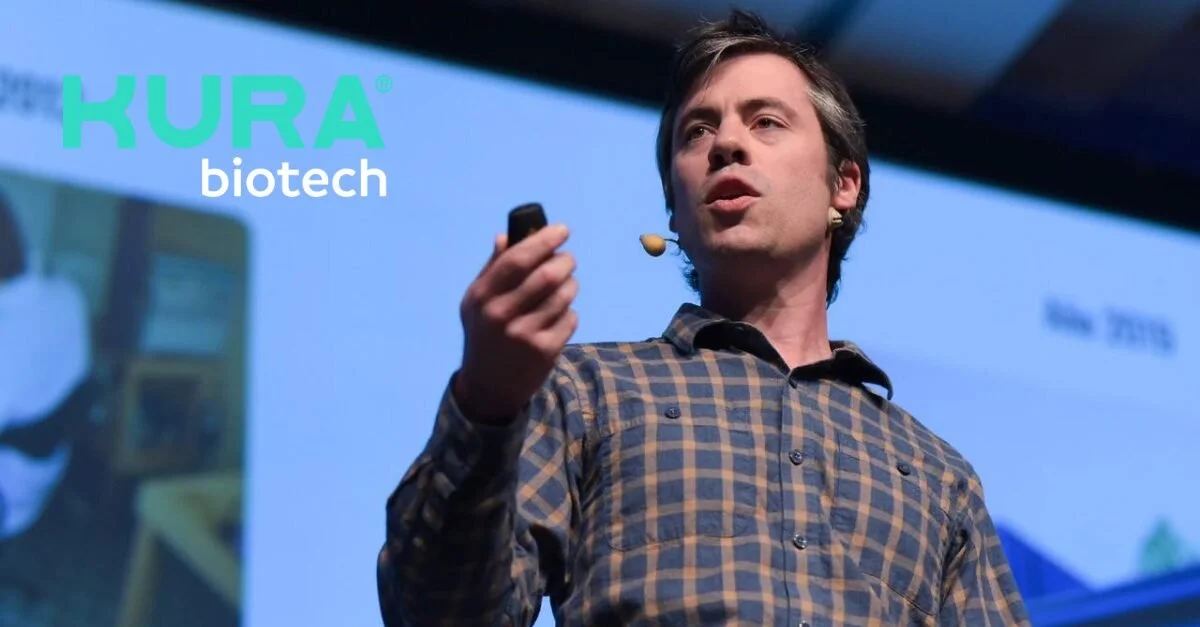
Meet Manuel Rozas, an emblematic figure in Chile's scientific innovation ecosystem. As the founder of Kura Biotech, he has positioned his company as one of the pioneers in biotechnological enzyme production in Latin America, transforming his passion for science into a global enterprise that sells to the world's leading toxicology laboratories. Beyond his business achievements, Manuel dedicates significant efforts to the regional development of science-based companies. He contributes to this mission through two key initiatives: The Liquen Foundation, which is Kura Biotech’s philanthropic arm that donates 2% of sales to support projects addressing social and environmental challenges in the region; and the Patagonia Biotech Hub, an innovation and collaboration space for biotechnology based in Puerto Varas, where Kura Biotech plays an active role in management.
Manuel works in Puerto Varas, a Chilean city of just over 50,000 inhabitants, surrounded by Lake Llanquihue and situated at the foot of the Osorno volcano, which offers spectacular landscapes. Since its founding, the city has developed thanks to agriculture, livestock farming, and the salmon industry. Today, it is establishing itself as a popular tourist destination and a promising innovation hub in southern Chile.
In this interview, Manuel shares valuable insights about his journey as a scientific entrepreneur, the challenges of building a biotechnology company, and the importance of connecting academia with industry. He emphasizes the need to educate Latin American industries about their role as active users of biotechnology, so that they value and support the development of local solutions. He also underscores the need to create collaborative infrastructure that allows new entrepreneurs to accelerate their projects without compromising their initial capital on equipment, thus fostering a more robust biotechnology ecosystem in the region.
During your university years, did scientists consider entrepreneurship as an option? How did your interest in creating a company from science arise?
My path to entrepreneurship involved a transition. When I first entered university, I wanted to become a zoologist, but I soon realized I was much more drawn to applied science. At that time, biotechnology and entrepreneurship were barely present in Chile. In fact, terms like “entrepreneurship” and “startup” didn't even exist yet. These concepts started gaining traction later, largely driven by Corfo, the Chilean agency that provides funding that doesn’t require giving up equity (non-dilutive funding), to support entrepreneurs in the country. I was also deeply influenced by Fundación Ciencia & Vida, a non-profit organization founded by Pablo Valenzuela and Bernardita Méndez, that aims to reduce the social and economic gap in Chile through scientific innovation.
I also had an interest in entrepreneurship due to my family’s influence; my father was an entrepreneur. Once I decided that I wanted to pursue this path, I broadened my studies at the end of my degree, taking courses in economics and engineering disciplines, knowing I had many knowledge gaps to fill in order to prepare myself for starting a company.
Can you recall a particular experience that inspired your decision to become an entrepreneur?
I remember being frustrated with how recognition works in the scientific and academic path. It can feel inconsistent, largely influenced by leadership. If your supervisor doesn't notice your contributions, you might not receive any recognition at all. I thought, if that's the path, I'd prefer working in the private sector with a good salary. But, if I’m going to take risks, I want to see the returns and work on something that truly interests me, not just something that interests someone else.
It also influenced my decision to undertake the work with vaccines I carried out at the Fundación Ciencia & Vida. Rather than a single defining moment, it was a series of diverse experiences that shaped my decision to start my own business.
What was it like starting a startup as a solo founder?
It happened by chance. I started with a business partner; he was the business administrator and I was the scientist. We experimented with many ideas and once the company started to work, conflicts arose that we couldn't resolve. The emotional toll of ending this partnership made me hesitant to start with partners right away. Having a partner means building trust, which takes time and effort and it doesn't happen overnight. So, I decided to continue on my own. However, I believe it's always more valuable to have co-founders than to work alone. With co-founders, you rest better at the end of the day, feel more supported, and enjoy the journey much more.
What were the main difficulties you faced at the beginning of Kura Biotech and how have those experiences shaped your current projects?
One of the biggest challenges was having many ideas but no way to execute them. We didn't have our own laboratory and had to borrow space from university professors, which meant sharing with other students, each with their own egos and concerns. Fortunately, we received support from many people. That experience taught me the importance of asking for help. Those who actively seek assistance, despite rejections, ultimately find opportunities
Those early struggles led me to become actively involved with the Patagonia Biotech Hub, a collaborative initiative in Puerto Varas. We're building collaborative laboratories so entrepreneurs can accelerate their projects without spending their initial capital on equipment, allowing them to focus directly on developing their ideas.
In what ways did your academic background influence the development of your company?
In Chile, scientific careers don't teach you how to develop businesses. I was fortunate to observe other entrepreneurs building their businesses. For me, it was a ”decision de guata” (a gut decision), as we say in Chile. I think that’s what makes my company different from others. It carries my personality, reflecting both my successes and my mistakes.
How did Kura Biotech grow in its early years and what were the key takeaways from that period?
I remember the feeling of our first sale. It was something I had made with my own hands in a small lab at home, and we received an order from Canada. At that moment, the amount of money did not matter, it was about the fact that someone valued what I had created. It felt like an artist selling their first piece of work. You do it because it challenges and excites you and suddenly you realize someone else is willing to pay for it. The sale closed the loop, it confirmed the product had value.
As we began to grow, we had to learn quickly and avoid mistakes as much as possible. For years, my strategy was to get a foot in the door. Unlike many startups that rely on big investment jumps, Kura’s growth was organic.
We focused on areas where we could venture that did not require large amounts of initial capital, which allowed us to build steadily. I still remember the euphoria of receiving our first significant purchase orders.
Can you share your experience with international expansion and entering new markets?
Our initial sales were in the U. S. market. My first commercial move was setting up a booth at a fair in San Francisco, which I attended with my wife, to present the product. We began selling without intermediaries. From there, we expanded to Canada and Australia, well before entering Chile or Latin America. Our entry into the Latin American market came later, during the COVID-19 pandemic, when we developed RT-qPCR and RT-LAMP kits for virus detection. In a way, it was a reverse learning process: We first learned to sell in developed countries and only later brought that experience back to Latin America.
What changes do you think are necessary to strengthen the biotechnology ecosystem in Latin America and support scientists in launching bioventures?
In Latin America, we need to recognize just how much biotechnology applications have been applied in society, particularly in large industries. Once industry and society understand that they are the active users of biotechnology, it will stop being perceived as a field that is exclusive only for scientists. When industries reach this awareness, they will see the value in supporting or buying from local biotechnology startups that today may seem unusual. This is why, at Patagonia Biotech Hub and Enbio, we are committed to educating different sectors in Chile, especially major users such as the salmon, fruit, and other biological industries that are potential consumers of biotechnology.
Latin America is already a massive user of biotechnology; however, most of it is imported, meaning significant resources leave the region. Therefore, developing biotechnological solutions adapted to our local needs will prevent forcing the adaptation of imported technologies that were not designed for our context.
What are the long-term goals of the Patagonia Biotech Hub?
The Hub aims to serve as a platform connecting companies' needs with solutions offered by biotechnology startups. This is not just a regional initiative, but a national one with global potential. Startups that develop solutions for the salmon, forestry, or agricultural industries in Chile will be able to export these technologies to other countries and continents.
In many Latin American countries, there is a notable gap between academia and industry. How do you see the relationship between the two in Chile?
It exists in Chile, too. Science only existed in academia for a long time and industry bought and adopted science made in other countries. I think an effort is being made to build more bridges between the two, but it's a long process.
Which skills do you consider most important in your role as CSO?
I believe the key lies in combining management skills, scientific knowledge and business vision. Strategic thinking is fundamental, because it allows you to connect immediate needs with medium and long-term goals. Some technical knowledge is necessary to communicate effectively and understand problems. But mainly, most specialized work must be delegated to your team. Strong management skills are essential for leading projects, and having some commercial knowledge also makes a big difference..
What are the company’s greatest achievements to date?
To exist is already a great success, especially in Puerto Varas, far from Chile’s capital, and we’ve been around for 12 years. In Latin America, where everything tends to be centralized in the capitals, that's a significant achievement. It’s also part of our value proposition because the people we have in the company truly value where they live. Building strong scientific capabilities here is, in itself, a great accomplishment.
In terms of impact, we sell to the two largest toxicology laboratories in the world. Our clients include forensic users, from the police and military, to athletes. We have also collaborated with universities in many countries. During the COVID-19 pandemic, between three and four million Chileans were tested with our PCR kits, the only PCR kit produced and validated in Chile. We believe we are the main producers of toxicology enzymes in Latin America.
Beyond our business, we are a certified B Corporation, maintaining rigorous social and environmental performance standards through our impact model. As such, we seek not only economic benefits but also strive to create shared value. Through our Liquen Foundation, we have supported nearly 50 community and environmental projects. In short, we have achieved a strong balance between technical excellence and community impact.
What motivates you to live and work in Puerto Varas?
In theory, one of the few things you cannot create in a place is the place itself; its landscape, and the quality of life it offers. In Puerto Varas, in the Lakes Region, in the Yelqui basin, we have a high quality of life. People can be happy due to the good quality of services and opportunities that allow those who seek it to develop themselves.
Manuel Rojas offers an inspiring example of how one founder can help shape Chile’s growing bioinnovation ecosystem while building Kura Biotech. His work with initiatives like the Liquen Foundation and the Patagonia Biotech Hub shows how individual entrepreneurs can elevate a regional biotech community.
Are you interested in becoming a biofounder?
iGEM Startups supports the next generation of biofounders in navigating a path from project concept to startup-ready solutions. The Venture Creation Lab (VCL) is iGEM Startups’ flagship program. Join us for an intensive four-week crash course designed to guide scientists through the venture creation process. It will run in three different regions and will begin in April of 2026.
Apply now as a Biofounder: igem-all.typeform.com/Biofounder26