
iGEM Competition Featured on 60 Minutes
For over half a century, CBS’ 60 Minutes has been one of the most influential news programs in the United States. Since 1968, the award-winning weekly broadcast has shaped public understanding of science, politics, and culture, drawing more than 20 million viewers per week at its peak, and earning more than 100 Emmy Awards and 20 Peabody Awards for excellence in storytelling.
When iGEM was featured on 60 Minutes this Fall, it marked a milestone for synthetic biology and for youth-led innovation. Being featured on 60 Minutes reflects growing public interest in how young scientists engage with real-world challenges through synthetic biology.
The 60 Minutes Team was struck by iGEM’s focus on real-world problem solving and scientific rigor as they spotlighted the process a U.S. iGEM Team from Georgia’s Lambert High School went through as they worked to develop a better way to detect and treat Lyme disease. The piece highlighted the team’s scientific skill, focus and resilience.
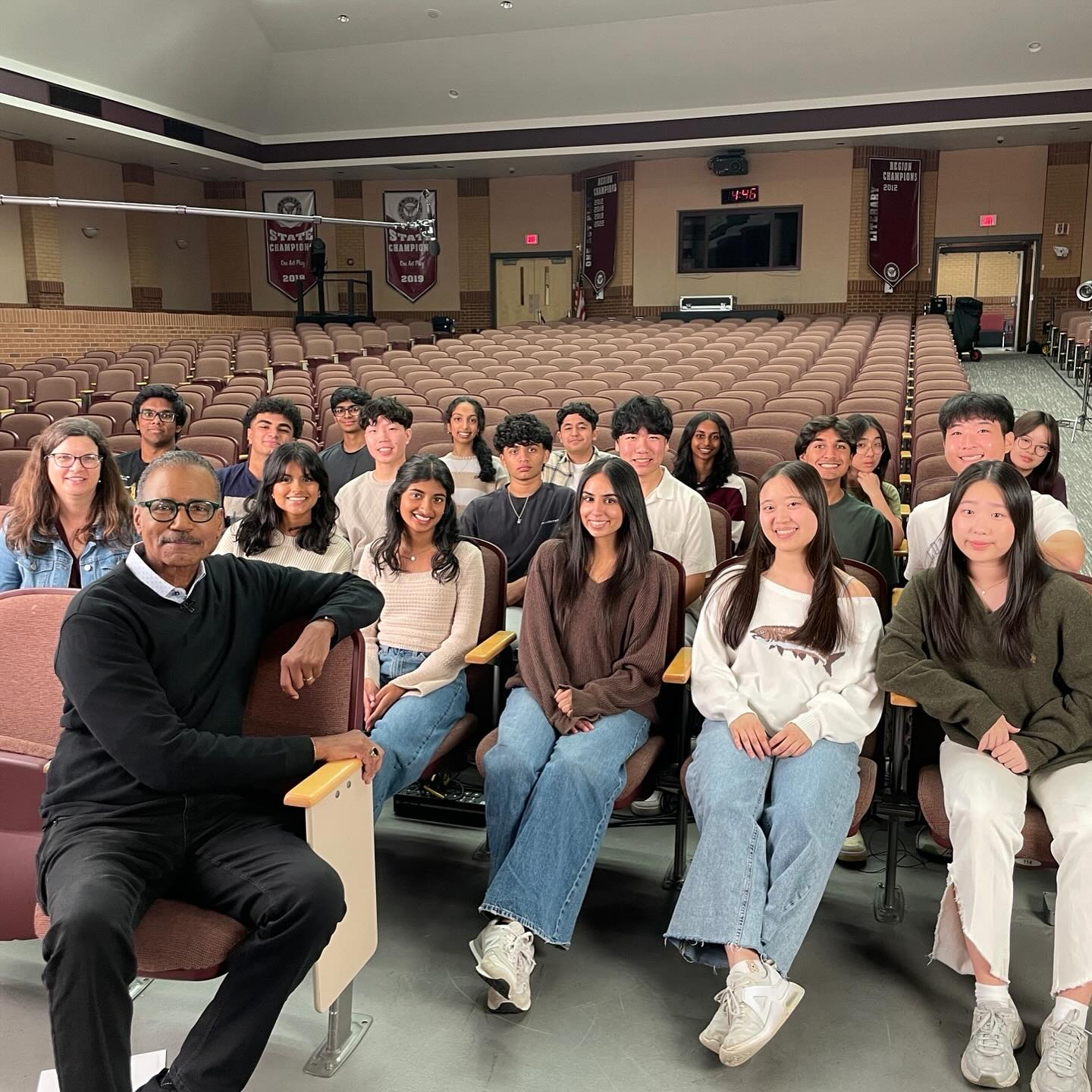
60 Minutes correspondent Bill Whitaker, with the iGEM Lambert-GA 2025 Team.
So, what is it about Lambert High’s iGEM journey that makes it an example for aspiring iGEM Teams?
A 13-Year iGEM Journey: The Story of Team Lambert-GA
Lambert’s appearance on 60 Minutes is a proud moment for a program that has quietly become one of the most competitive high school science teams in the United States.
Team Lambert-GA began its iGEM journey in 2013. Over more than a decade, they built a reputation for rigorous student leadership, polished engineering, and deeply integrated Human Practices work. Today, the Lambert iGEM program is so respected that families move from across the States, and even from abroad, to join its school district, hoping for a chance to compete for one of just 10 available spots on the team each year.
Competition for those spots is intense: Applicants submit a project proposal, complete a skills test and sit for an interview. Those who make the cut join a program that has earned 8 Gold medals, 1 Silver, 2 Bronze and has a trophy case full of major prizes, including 2022’s Grand Prize. Their long-term consistency is reflected in five consecutive years in the global Top 10, and nominations across Wiki, Poster, Model, Hardware, Product Design, Education & Public Engagement, Inclusivity, Safety & Security, Sustainability, and more.
Lambert-GA’s 2025 iGEM Project
This year, Lambert turned their attention to Lyme disease, an illness that affects nearly 500,000 Americans each year. Despite its prevalence, early detection remains a major challenge, as current tests often fail to identify infections during the first two weeks, when treatment is most effective. Left untreated, Lyme disease can lead to arthritis, nerve damage, and even long-term cardiac complications.
“One of the biggest problems with Lyme is the lack of being able to diagnose it,” said team leader Avani Karthik. “We met someone who went 15 years without a diagnosis.”
Lambert’s 2025 project aims to change that. Using CRISPR, the team developed a method to selectively remove extraneous genetic material in simulated blood serum, exposing a protein that emerges during early infection. Once revealed, that protein can be flagged using a simple, kit-style diagnostic, similar to a COVID-19 rapid test or pregnancy test. This approach could one day enable faster, cheaper, and earlier detection of Lyme disease, improving treatment outcomes and reducing the risk of long-term complications.
It was this blend of sophistication and purpose, high-level genetic engineering applied to a deeply human problem, that caught the attention of 60 Minutes. The segment emphasizes the students’ troubleshooting experiments, explaining CRISPR with clarity, and demonstrating a maturity far beyond their years.
An Example for High School iGEM Teams
And what enabled this high school to succeed in this way? The Lambert iGEM team’s success is the culmination of a vertically integrated pipeline that functions much like a competitive high school team sport does in the United States. Students are introduced to biotechnology through elementary school outreach events, an annual Middle School SynBio Summer Camp, and a “Junior Varsity SynBio” program that supports BioBuilder clubs. In a typical year, Lambert’s SynBio community engages hundreds of students and their families. For those with the interest and the ability, joining the iGEM team becomes the equivalent of participating in a year-round varsity sport.
But Lambert’s success doesn’t have to be unique. Indeed, their program offers an operational example that other communities can adapt to meet their own needs.
As an example for STEM Education, Lambert’s journey shows what young scientists can achieve when given trust, resources and room to lead. Over the span of thirteen years, they have built a culture that emphasizes teamwork, responsibility and impact, values that are at the core of iGEM and that have shaped thousands of students and continue to inspire thousands more.
Students around the world have the potential to thrive by addressing complex problems with synthetic biology. Every community needs a workforce that can solve problems, while valuing the human impact of their work, collaborating in diverse teams, meeting deadlines and communicating effectively with global audiences.
iGEM as Preparation for Lifelong Achievement
Indeed, iGEM offers opportunities to do all of these things and so much more. As Janet Standeven, former Lambert High PI and current Director of High School for iGEM notes, “What excites me is that the iGEM Competition creates unique opportunities for collaboration at the high school level. While many other science competitions are for individuals (rather than teams), and limit participants to solving a predefined challenge, iGEM offers an experience that most closely reflects the authentic biotech start-up cycle.”
Being featured on 60 Minutes is a proud moment for iGEM, and a reminder of what iGEMers are capable of. It’s another step in a story still being written… one that continues to elevate synthetic biology education across the world.
For a closer look at this year’s iGEM projects: https://competition.igem.org/results/2025
For a closer look at Team Lambert-GA's 2025 project:
For the full transcript and access to the 60 Minutes segment: