As we conclude the Fast Track Program of the 2020 EPIC VCL, we’d like to take this opportunity to reflect on the 2020 Americas Venture Creation Labs (VCL), as well as commemorate the special award recipients. .


This blog is where we share stories, announcements, and insights from around the iGEM community.
As we conclude the Fast Track Program of the 2020 EPIC VCL, we’d like to take this opportunity to reflect on the 2020 Americas Venture Creation Labs (VCL), as well as commemorate the special award recipients. .
Amidst the extraordinary circumstances of 2020 a new generation of iGEM BioFounders are on the rise and they are an extraordinary source of hope in our efforts to transition to a more equitable & sustainable future!
The Entrepreneurship Program & Innovation Community (EPIC) began the year with three major questions in mind…
The 2020 iGEM Season is quite a bit different from previous years, and the Executive Judging Committee (EJC) has made some exciting changes to the medal criteria so that all iGEM teams can participate and achieve medals – with or without lab access – this year.
The iGEM competition should be a challenging, fun, and rewarding experience. But like all science and engineering, every iGEM project has some potential to cause harm. And so iGEM has a number of policies in place, as well as dedicated committees, to help teams do the best science and engineering possible – maximizing benefits for the world while at the same time minimizing any chance of harm.
iGEM is a unique space for a diverse range of students because iGEM actively attempts to encourage and support students from around the world to participate in its competition and community. But for the mentors or instructors in the room, what do you do actively to ensure that a diverse range of students in your program feel welcome and included?
It’s been three weeks since the end of the EPIC Asia-Pacific Venture Creation Lab (VCL), participants were filled with energetic spirits, enthusiasm, and to continue their entrepreneurial journeys.
We know that many teams this year will want to work on COVID-19, and we believe you have much to contribute. In this exceptional year, we want you to be able to do the most important science and engineering possible … AND … we want to make sure you can do that safely and securely.
It feels especially important, right now, to think about how to be a responsible synthetic biologist, the sort who deserves the trust of these friends and family members.
Our first VCL kicked off in the EMEA region in March of this year. 30 participants from 11 countries joined from the comfort of their homes thanks to the digitalization of the program. Despite the global consequences of the pandemic, the teams were highly motivated and exceeded many of our expectations.
Bluepha was founded by two iGEMers from different universities in China: Dr. Zhang himself from Peking University and Dr. Teng Li from Tsinghua University. They met at the iGEM Giant Jamboree in 2010 and have remained friends ever since.
Radhakrishna Sanka, better known as Krishna, is a Computer Engineering Ph.D. candidate at Boston University. This blog post highlights the importance of entrepreneurial ecosystems and the impact one involved member can have on their creation and success.
“In a few short weeks, with the hard work and participation of this entire community, we’ve gone from ‘Is iGEM happening?’ to this – an astonishing number of teams (over 300) and the official opening of the competition in a way that has never happened before.”
Many people in the iGEM community are pulling together to create a meaningful and memorable experience, both for returning iGEMers who are continuing their journey and for newly minted iGEMers who are joining a team for the first time.
It’s often been said that iGEM is not easy, iGEM is worth it. And we at IDT believe this is especially true during this time of a pandemic.
The crisis was completely fictional, but the responses necessary for developing clear containment and communication strategies to address that crisis were real. And the insights, knowledge and training shared at that conference are prescient as we face the global COVID-19 pandemic today.
In 2019, iGEM remained the leading pipeline for talent in synthetic biology, inspiring thousands of students to work in teams and use synthetic biology to solve local problems and tackle global challenges.
Hyasynth was founded in 2014 with a set of cofounders who had all participated in iGEM before. Our idea didn’t come from an iGEM project, but our first year of starting up looked a lot like an iGEM project.
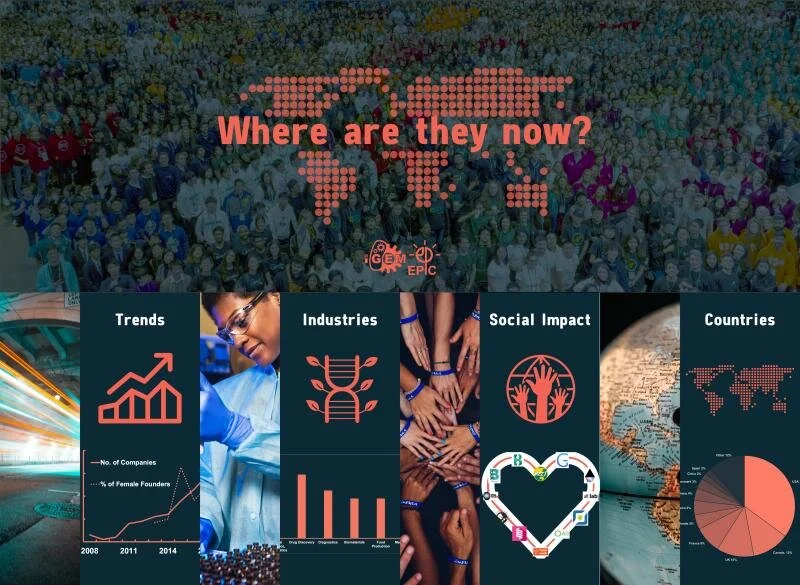
Each year after the iGEM competition comes to a close, the innovation and entrepreneurial spirit of iGEM teams continue on – building upon the proofs of concept tested during the competition, turning prototypes into innovative products.