Where Are They Now? Milestones of the 2025 Venture Foundry Cohort
In 2025, 85 teams signed up for Venture Creation Lab to learn what it takes to bring a bioventure to market. Over four weeks, fifty of them completed the program and pitched their ventures. From there, the field narrowed: 25 teams advanced to a dedicated mentorship program, and the top 15 were chosen to travel to Paris and pitch at the Startup Showcase during the Grand Jamboree.
The Grand Jamboree itself was full of insight, feedback, deal conversations, and connections with like-minded bioinnovators and ecosystem industries. But what happened after that? What milestones did these teams reach next?
There's no fixed playbook for what comes next in an early-stage venture – no established launchpad or set of rules to follow. Instead, there's a wide range of paths, and each team decides what's right for their venture as the opportunities come.
So, here’s what happened next for eight of them:
First Checks and Where the Capital Is Going
The first funding news from the 2025 cohort came in February 2026 from Lumigenic, after their early pivot. The investor conversation reportedly started at the Grand Jamboree itself, where industry figures introduced the team to investors who would go on to back them.
SPICYCELLS: the funding was just the beginning
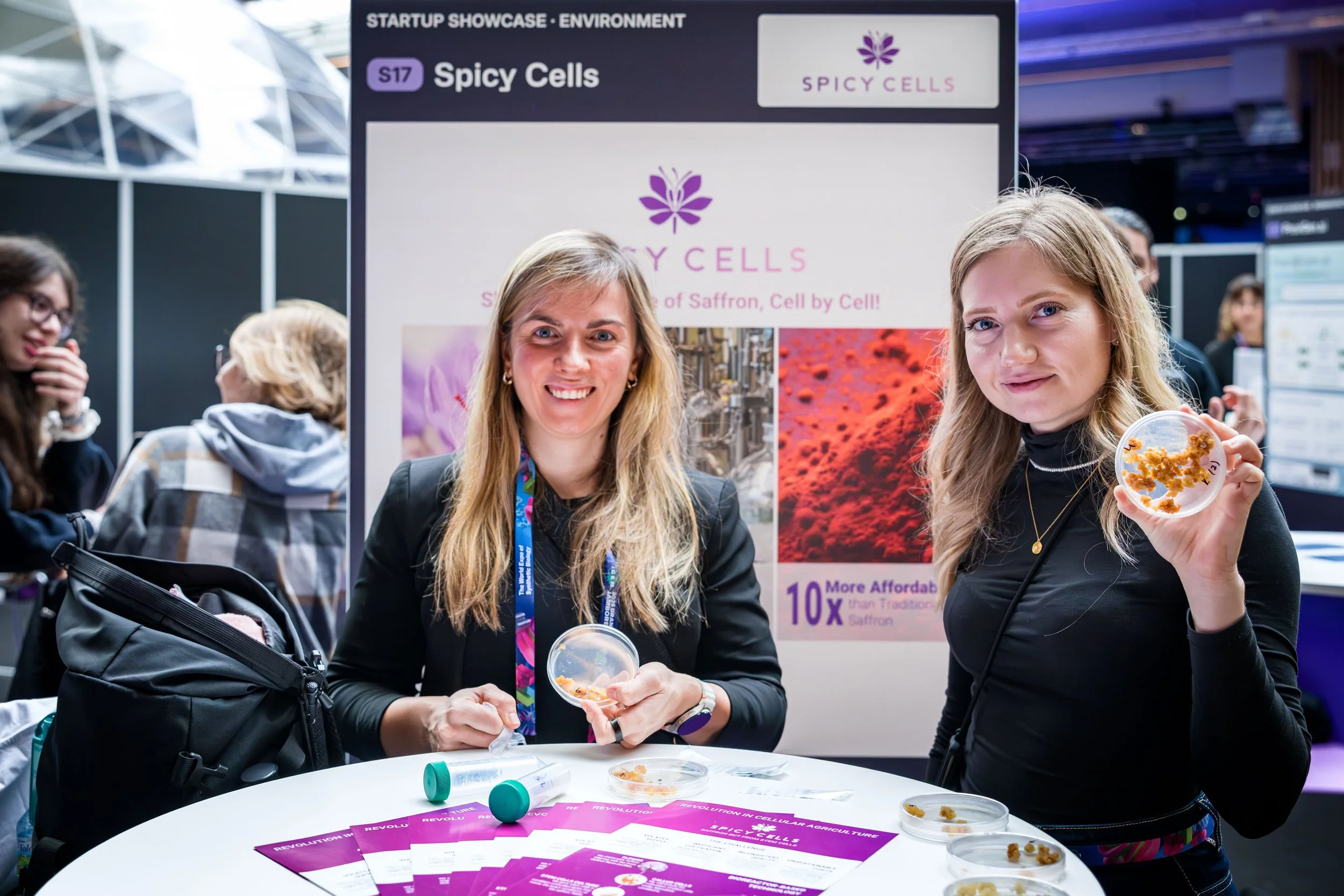
SPICYCELLS at the 2025 iGEM Grand Jamboree (from left to right: Šarlota Kaňuková, Eliška Ulmanová)
SPICYCELLS is building a way to grow rare plant cells like saffron directly in the lab, making high-value ingredients accessible and sustainable without the land, labour, and supply chain fragility of traditional cultivation.
In early 2026, they received €40,000 investment from Czech Founders VC. The investment grew out of SHERPA, Czech Founders VC's own accelerator programme designed to give early-stage startups hands-on mentoring and direct exposure to the fund's investment team. SPICYCELLS was selected as one of only three startups from more than 80 applicants, and by the time the investment conversation happened, Czech Founders had already spent several months watching the team work.
“The Czech Founders investment gave us the space to move beyond proving that the idea works and start building the foundations of a company around it. It allowed us to work more systematically on technology, intellectual property, market validation and the question of what we actually need to prove before an industrial partner can seriously engage with us." - Dr. Šarlota Kaňuková, co-founder of SPICYCELLS
Since closing that round, the team has secured approximately €203,000 in equity-free support through the CzechInvest Technology Incubation programme. The funding is helping them bring in specialised expertise and build scientific and technical partnerships that can help move the technology forward alongside additional Letters of Intent from potential industry partners.
“That combination matters to us because we no longer see scientific validation and market validation as two separate stages. They have to inform each other from the beginning. A technology can be scientifically exciting and still miss what the market actually needs, so we are trying to develop both sides together.” - Dr. Šarlota Kaňuková, co-founder of SPICYCELLS
The team has also been selected for the EIT Food Accelerator Network 2026, which brings together 65 startups selected from more than 600 applications. SPICYCELLS is one of 10 startups in the Paris Hub, focused on Biotech Ingredients, Products and Processes.
Lumigenic: $100,000 to catch bad enzyme designs before they hit the bench
Lumigenic is building a verification layer for enzyme engineering, a way to audit AI-generated designs before committing to expensive wet-lab work. Since the 2025 Startup Showcase, Lumigenic secured $100,000 in funding from 1517 Fund, a fund built around backing young, unconventional founders, which tracks with what we know of this team.
VitroZymes: grant-funded in tackling the “forever chemicals” problem
VitroZymes is developing a sustainable solution for PFAS degradation in the water sector, tackling the "forever chemicals" problem that's become one of water treatment's hardest open questions.
The team was awarded an Innofounder grant, a program from Innovation Fund Denmark supporting entrepreneurs with a higher-education background. In addition, they recently received a Mikrolegat grant from the Danish Foundation for Entrepreneurship, which will enable them to conduct key analyses for their pilot project.
Proving Grounds in Accelerator Programs
LiqSens: a smarter way to watch a failing heart
LiqSens is developing a microneedle patch paired with a biosensor that reads cardiac biomarkers like NT-proBNP directly from interstitial fluid, giving heart failure patients and their clinicians a real-time window into disease progression at home, before a crisis forces a hospital visit.
The team was named a Stage 1 winner of Venture Kick, Switzerland's largest startup funding competition, a three-stage, non-dilutive program that has driven more than $12 billion into Swiss university spinoffs since it began. That Stage 1 funding will carry LiqSens through early prototype validation as they prepare for Stage 2.
Provigen.AI: making biology labs think for themselves
Provigen.AI is building physical-AI software for robotic biology labs, software that lets automated equipment make better decisions about the experiments it's running, not just execute a fixed script.
This year, the team has been putting that to the test inside the Paris Biofoundry, tackling two of the harder problems in lab automation: translating scientific intent into protocols that machines can actually run, and using AI to handle end-to-end plasmid assembly (Read more here).
They've built a track record of getting selected: DayOne Accelerator 2026 in Basel, the UnternehmerTUM Incubator 2026 batch in Munich, and counting.
Averra: what’s in the soil before it reaches plate
Averra's NOVA device is a portable, low-cost biosensor that detects bioavailable heavy metals like cadmium and manganese in soil and plants, a direct response to concerns about contamination working its way into the food supply.
After a strong showing at the 2025 Startup Showcase and a spot in Boston University's Summer Accelerator, Averra was selected for the Spring 2026 Blueprint Cohort at The Engine, a venture firm spun out of MIT to back science-heavy startups with long R&D timelines.
Esperance Biotech: from The Residency to a pre-seed round
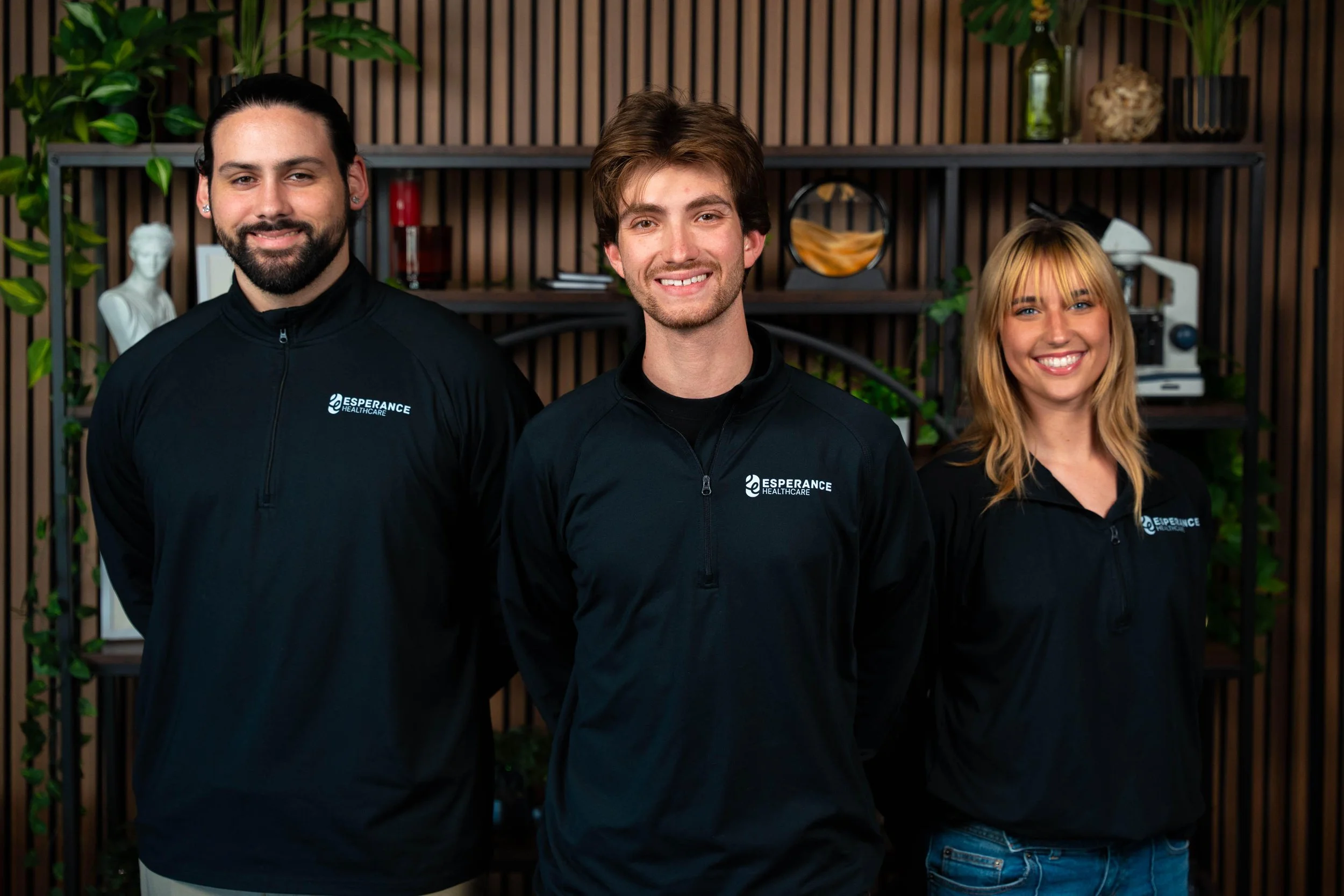
Esperance Biotech (from left to right: Ely Nieves, Zachary Asarnow and Ava Polly)
Esperance Biotech is developing engineered living therapeutics for rare metabolic diseases. Co-founders Zachary Asarnow, Ava Polly and Ely Nieves recently completed The Residency's Vienna cohort, an intensive programme that, by their description, gave them something a traditional accelerator rarely does. The team has since moved to San Francisco to continue building (Read more here).
"The Residency gave us an environment of ambitious, high-agency founders across completely different fields who constantly challenge us to think bigger and approach our company from perspectives we may never have considered." - Esperance Biotech
Over the next 6-12 months milestones, the team is focused on finalising and validating their in vitro design, expanding the research team, and beginning initial in vivo studies, while pursuing Orphan Drug Designation and potentially Rare Paediatric Disease Designation as they prepare for a pre-IND meeting with the FDA.
On Stage
Synfera: from Jamboree runner-up to Calgary's pitch competition winner
Synfera came second at the 2025 Startup Showcase with their shelf-stable, universal oxygen-carrying therapeutic aimed at emergency and critical care, built around recombinant erythrocruorin as a solution to blood shortages. The momentum didn't stop at the showcase stage. Synfera went on to win Aurrin Ventures' monthly pitch competition for Calgary-based startups, proof that the pitch that impressed iGEM's judges also impressed investors outside the community entirely.
NivoCell: writing DNA like software, from Paris to the Baker lab
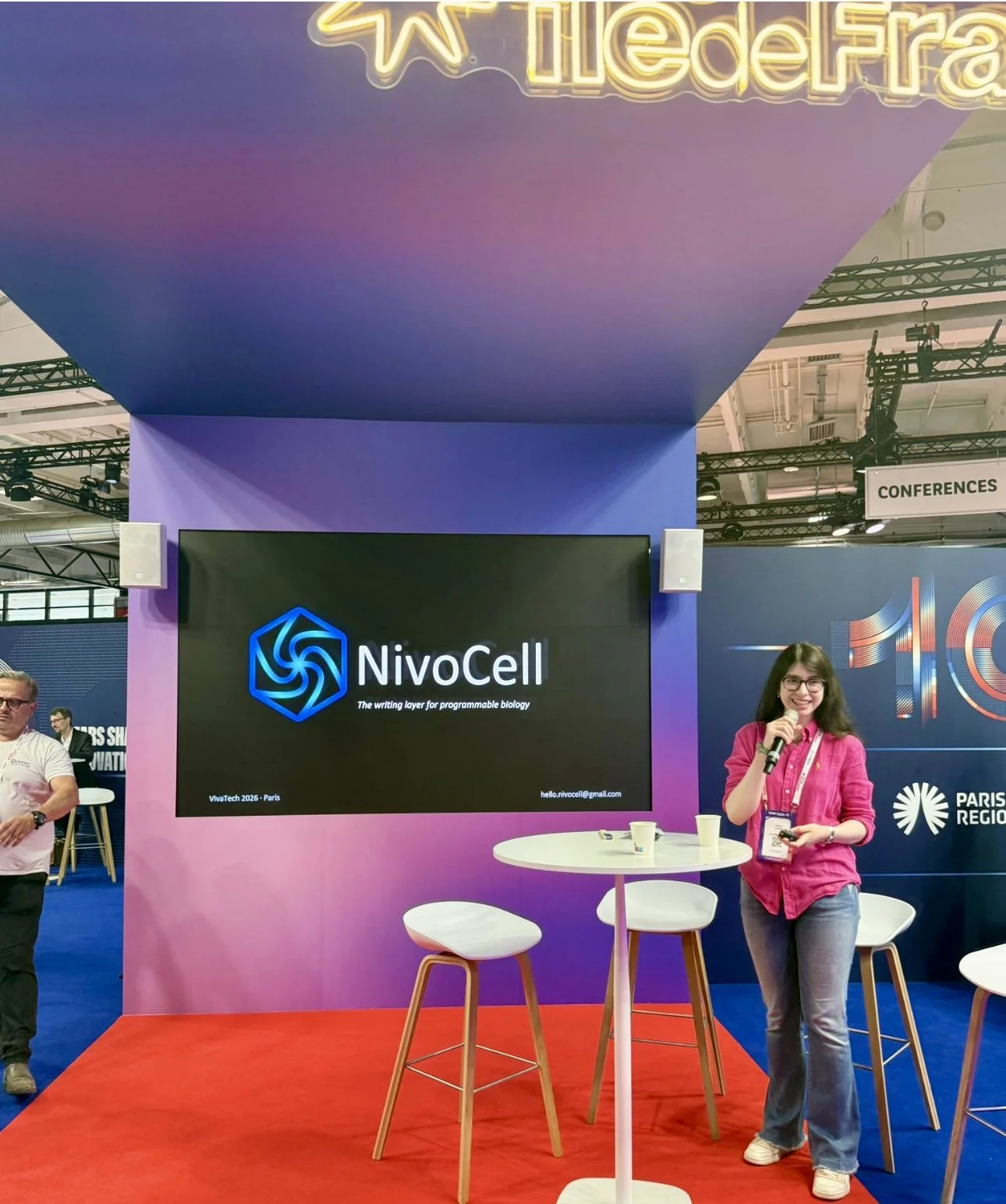
Nicole Alizade pitched NivoCell at VivaTech 2026
NivoCell, founded by Nicole Alizade, is developing an intracellular nanopore-based DNA synthesis platform, a faster, cleaner, more scalable way to write DNA, with applications ranging from therapeutics to data storage. It is a market that does not yet exist, which makes building it both harder and more urgent.
Since the iGEM Startup Showcase, NivoCell has been on what Nicole describes as an exponential curve, one where each credential made the next opportunity easier to reach.
"The iGEM Startup Showcase was really the starting point of it all. After that it's been easier and easier as we advance, get more credentials, and get into more events."
Throughout the year, the team participated in four to five pitching events, all for general audiences, which pushed Nicole to develop a new way of explaining the technology. The approach she landed on: connecting DNA synthesis to everyday objects.
"The plastic bottles we use, the clothing we wear, the cereal we eat in the morning. If we break it down enough, they all come from one single molecule, which is DNA. That analogy has been a big help to make people see that even if science sounds complicated, without it they wouldn't have things they use every single day."
VivaTech came not through an application but through the network Nicole had built. She received three separate invitations from three different organisations to the same event, and pitched twice: once for her university, where Nivocell won a grant, and once for the Région Île-de-France stand (Read more here). YC Startup School Paris, a one-day gathering for founders at Station F followed. And then, the move to the US.
“What I’ve noticed since arriving here is how open people here are to ideas that seem very ambitious. You can work through them step by step without being shut down on technical details early on.”
Nicole is now a PhD student at the University of Washington, currently working in Institute for Protein Design and David Baker’s lab, an environment she describes as transformative for how fast she learns.
“Questions that used to take me a month to answer, I can now ask and have an answer in a minute here. That changes how quickly you learn and advance.”
Nicole also filed a provisional patent in January, covering the specific nanopore polymerase conjugation approach NivoCell is using to establish an anteriority date as the field begins to attract broader attention. A DARPA (Defense Advanced Research Projects Agency) project proposal launched shortly after the Startup Showcase signalled that institutional interest in intracellular DNA synthesis is growing too.
What can one year ahead look like? A note from the 2025 cohort
If you are on an iGEM team wondering whether your project can become a real venture after Jamboree, this is the answer: it can, and here's the proof. Everything above represents one year of milestones from teams that started in the Venture Foundry program.
Their iGEM experience, Esperance Biotech says, shaped the foundation of how they build:
"iGEM taught us to build around the people we're trying to help: identify the problem, engage directly with patients, and continuously build, test, learn, and iterate. What surprised us most was how valuable the iGEM community continues to be, from interdisciplinary perspectives to a network that still supports and connects us today."
Nicole Alizade, founder of NivoCell, has a message for the founder she was a year ago:
"Never lose sight of a vision that only you might have and no one else might understand. It's not because it's a stupid or useless idea, maybe it's because you're actually inventing something new that no one has thought about before. If you are thinking about something day and night, you just need to go and try it."
12 inspiring bioventures will be pitching at the Startup Showcase at the 2026 iGEM Grand Jamboree in Paris. If you're attending, come see them pitch and ask them firsthand what the journey has looked like. And if you want to turn your innovation into lasting impact and be the first to know when 2027 Venture Foundry applications open — fill in the Expressions of Interest form: iGEM Forms