Starting Without a System: Talha Zubair’s Journey into Synthetic Biology
Interviewed by Tanfia Khan Disha & Shibly Chowdhury
Written by Tanfia Khan Disha
As part of “Synthesizing Synergies: Asia Edition,” an initiative of the iGEM Community to document the voices and experiences shaping Asia’s synthetic biology ecosystem, we spoke with Talha Zubair, former Financial Manager of iGEM Bangladesh, Wet Lab Member of the 2025 UBC iGEM team and the Founder of Bacto Crop. His journey reflects the challenges, aspirations and emerging opportunities for synthetic biology in South Asia and beyond.
Talha Zubair’s entry into synthetic biology began well before university. As a 9th grade student in Bangladesh, he was deeply fascinated by gene editing but found very limited access to hands-on research opportunities. “It was difficult to even find a lab where I could explore biology beyond textbooks,” he shared. While searching online for ways to engage with the field, he discovered the iGEM Competition, the world’s largest synthetic biology competition. Recognizing its potential, he reached out to early mentors and collaborators, which ultimately led to the establishment of iGEM Bangladesh, a student group dedicated to establishing the first iGEM team from the country.
While the group struggled to find support to compete, in 2025, Talha joined the UBC iGEM team in Canada, where he encountered a highly structured ecosystem with clearly defined roles across wet lab, design, administration and wiki building. Experiencing iGEM in two very different contexts allowed him to directly compare the contrasts in organization, access to resources and research culture between regions.
Synthetic Biology in South Asia
According to Talha, synthetic biology remains relatively unfamiliar to many students in South Asia. Teams often need to get introduced to the field itself before they can even begin recruiting members. Educational systems in the region still emphasize memorization, leaving limited room for interdisciplinary collaboration or applied problem solving. In contrast, synthetic biology encourages interaction, creativity and translation of ideas into real world solutions.
Talha believes this makes synbio particularly powerful for the region. It provides life science students with exposure to global research standards and a framework for interdisciplinary thinking. However, building and sustaining such collaboration is not easy. Engineers, biologists and designers rarely work together within traditional university structures, making iGEM team formation an additional challenge.
Funding, Infrastructure and Participation Gaps
One of the most persistent barriers Talha highlighted is funding. From his experience, in North America, academic and industrial ecosystems are closely connected, allowing early stage research ideas to receive sponsorship and institutional backing. Students can move fluidly between academia, startups and industry. In South Asia, this gap is much wider. Many industry partners expect product level models before providing any support, leaving student led research initiatives struggling to gain traction.
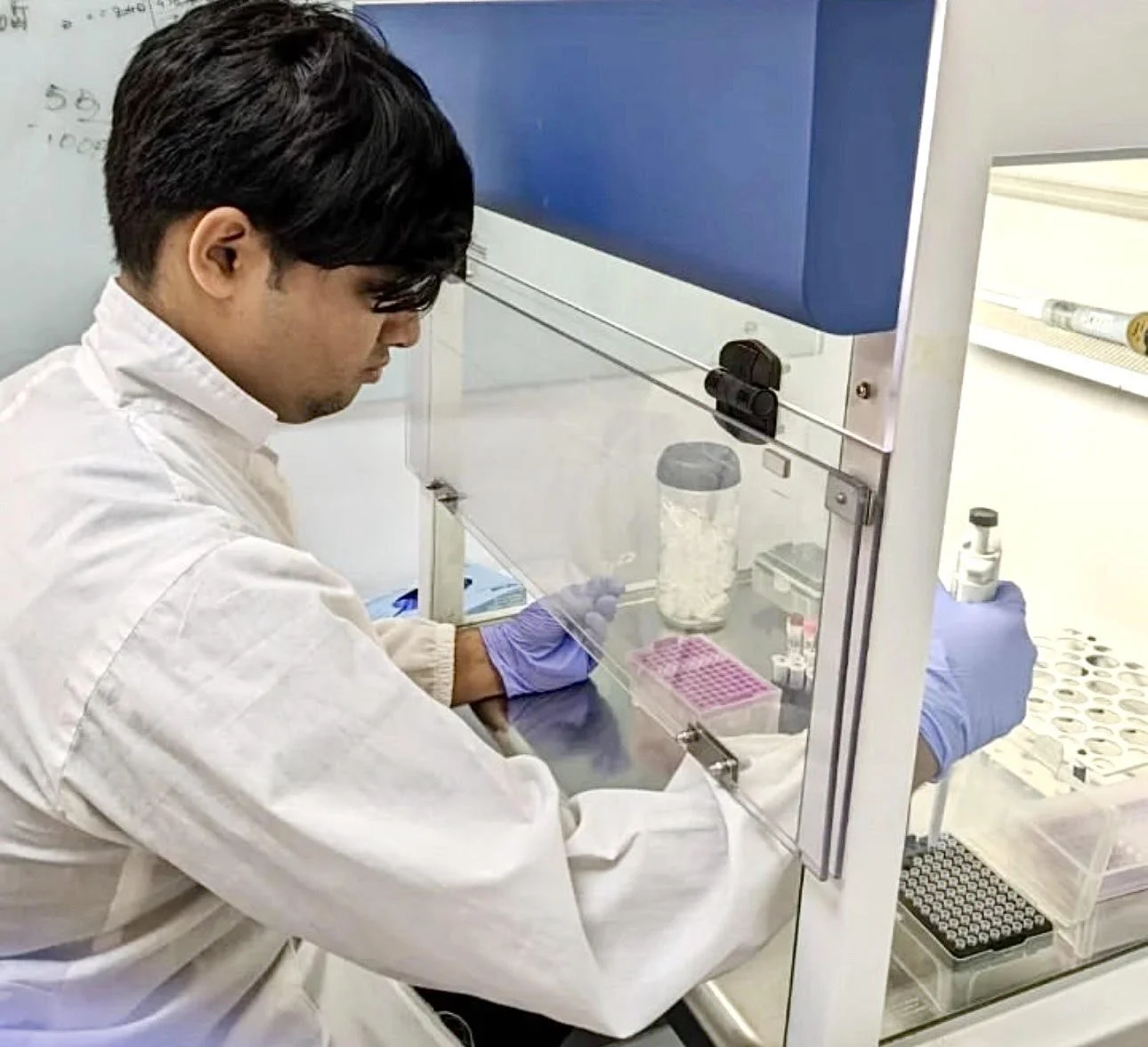
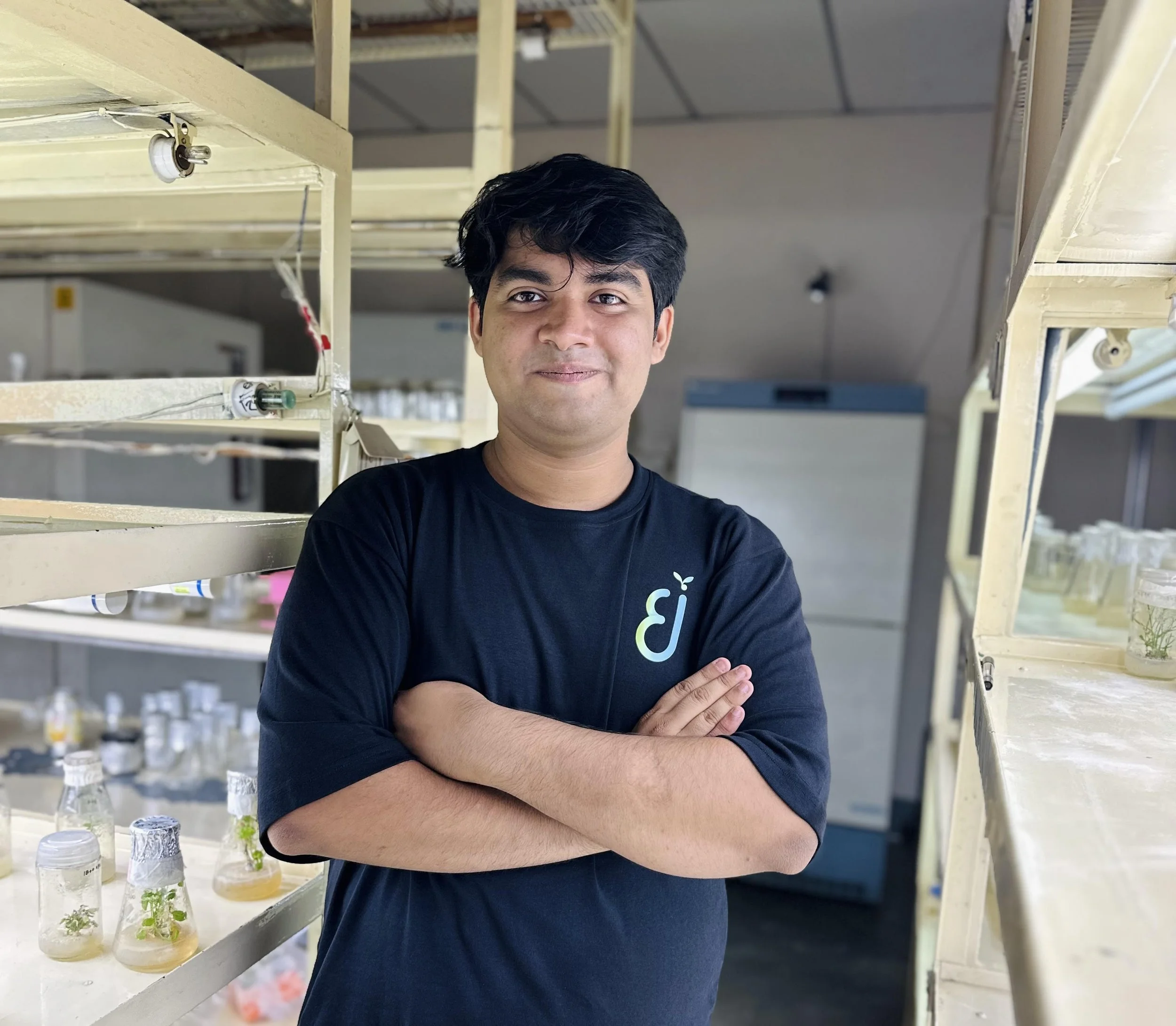
Talha Zubair doing preparatory work for an experiment using a fume hood.
These structural differences help explain why participation from countries like Bangladesh, India or Pakistan remains limited, despite strong interest and talent. Without sustained institutional support, teams often face burnout or are unable to return to the competition consistently.
Advice for Emerging Asian iGEM Teams
Drawing from his experience, Talha offers practical guidance for new and underrepresented teams. He emphasizes forming a strong team before finalizing a project, seeking grants early and recognizing that iGEM values diverse project formats, including computational, design, and conceptual approaches. Most importantly, he encourages students to focus on building awareness and community around synthetic biology before entering competition spaces. “If you love the field, nurture the community first,” he reflected. “Competition can follow.”
Through stories like Talha’s, Synthesizing Synergies: Asia Edition aims to capture regional realities, amplify underrepresented voices and guide the next generation of Asian iGEM teams navigating the evolving synthetic biology landscape.
Are you ready to start your iGEM journey? Start here!