From Funding Startups to Running One: Pedro Lovatt Garcia's Bioentrepreneurship Story
Interviewed and written by Szonja Skenderovic.
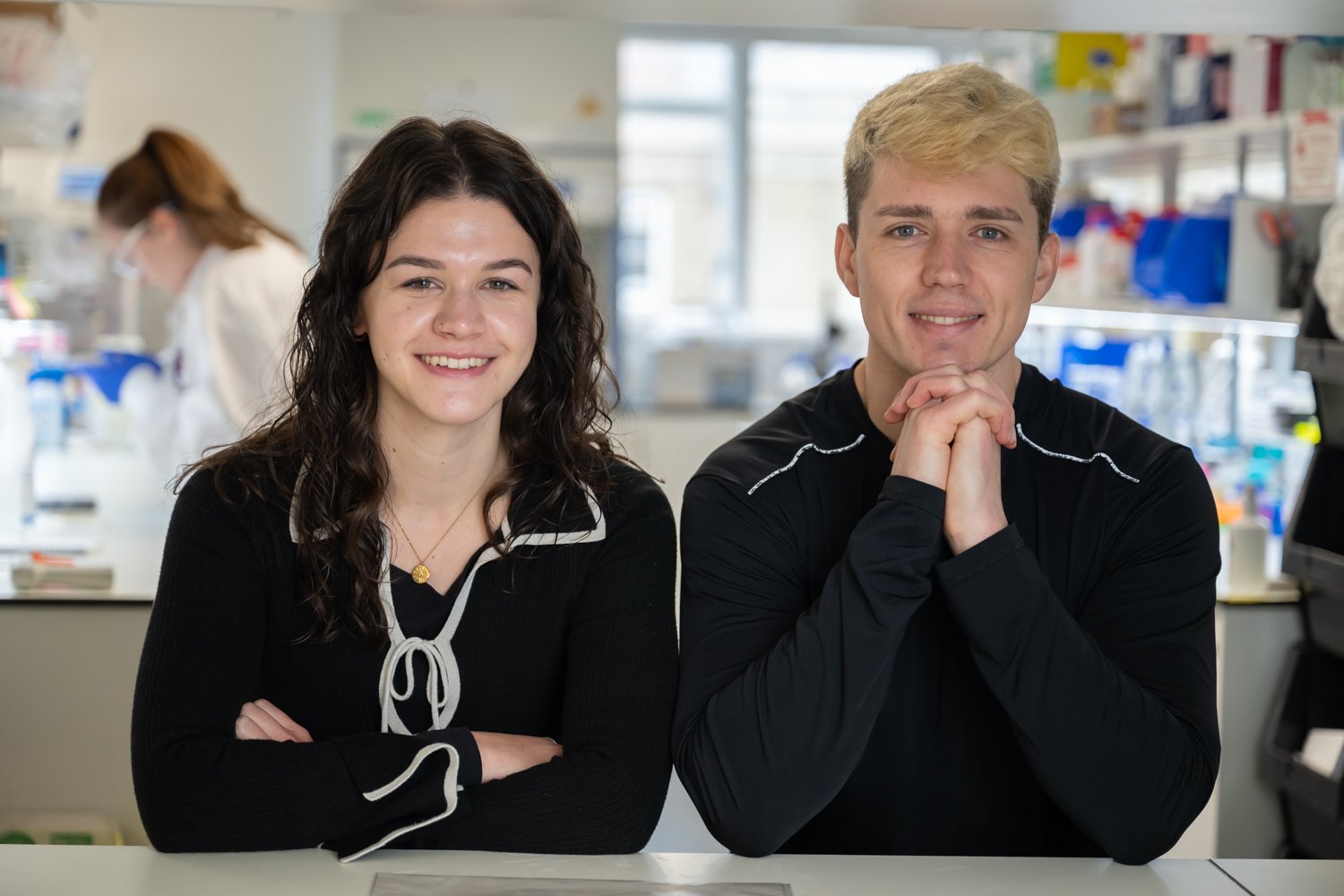
Meet Pedro Lovatt Garcia, Co-Founder and CTO of tera, previously known as Anzen Industries, a cell-free biomanufacturing startup that recently closed its £2.2M pre-seed funding round from leading European venture capital (VC) firms. This fundraise marks a significant milestone for tera as it prepares for its next phase of growth in the United States.
Pedro’s path to founding followed a clear trajectory through academia and venture capital, dating back to his undergraduate years as part of University College London’s 2020 iGEM team (2020 iGEM UCL). He went on to Imperial College London, earning his Master’s degree and beginning his PhD. Alongside academia, Pedro built his understanding of venture capital and early-stage startup building as a Student Investor at Creator Fund, a pre-seed and seed VC firm specialising in scientific innovation. He met his co-founder Amy Locks through a mutual friend, realised this was an outstanding person to build a company with, and dropped out of his PhD to start tera.
In this interview, Pedro talks through his iGEM experience, the lessons he learned as a Student Investor, the challenges of founding in biotech, and what early BioInnovators should understand about turning scientific discoveries into ventures.
Can you share a bit about your experience with iGEM?
My experience with iGEM was formative. I started my undergraduate degree in 2018 at University College London and became involved with the Biochemical Engineering department, which led iGEM UCL’s programme. I applied and was selected. The team had eight members, working under the mentorship of Stephanie Frank, an amazing professor at UCL. This took place in 2020, the year the pandemic began. Given the restrictions that year, the team pivoted to computational work.
We started brainstorming what we could do and what we found interesting. At the time, some startups were emerging around the idea of using enzymes to degrade plastic, which we were interested in exploring. Part of the team was also interested in making accessible drinking water, a considerable global challenge. Bringing these concepts together, the idea we landed on was to degrade plastic and break it down into its monomer parts. We chose polyethylene terephthalate (PET) plastic, one of the most extensively researched plastics for synthetic biology applications, given how widely available it is.
Rather than stopping at plastic degradation, we looked at whether the monomers could serve a further purpose. Drawing on existing iGEM projects for inspiration, we designed PETase-MHETase fusion enzymes that could convert PET to lactate, which can then be fed to Shewanella oneidensis bacteria that consume it to produce electricity extracellularly. That led us to computationally design a microbial desalination device, which uses the electricity generated from S. oneidensis to apply a current across to electrodes and remove Na+ and Cl- ions from water, to produce freshwater.
2. Most scientists would follow a more linear pathway from research to founding, but you explored investing too. What attracted you to that path?
I knew I wanted to found a company. To develop a distinct perspective on a technology worth commercializing, pursuing a PhD was a sound choice as it offered the time and space to do so. I saw it as an opportunity to learn, explore what the startup world looked like from the inside, and begin working towards something of my own. This time as a PhD student also allowed me to explore all the other ways science can be turned into real world impact, which ledlead me to deeptech investing.
There are now many investment funds that work with PhD students, drawing on their technical expertise to help evaluate how to deploy capital into science based startups. I worked with Creator Fund, a London-based fund that invests up to £1M into 10 to 12 startups every year. We sourced, analysed, and finalised investments into really cool companies that are now doing great things in the world. It was an amazing experience, being around other PhD students, Master’s students, and undergraduates all engaged with early-stage company building.
Selfishly, I used this experience because I wanted to understand how investors think. To secure investment, it helps to understand the jargon, worldview, and decision-making process of people who do this job every day. There are nuances in framing and in phrasing that are consistent across the industry, and knowing them helps to avoid common mistakes by understanding how investors think. You can learn that elsewhere too - you can network with people in VC, befriend them, go to events, and listen to them talk. But I thought, what better way to do it than to go straight in and try to do it? And seeing thousands of startups doing different things was a great way to spark ideas about in my mind of what you could do differently.
So I did that on the weekends alongside my PhD work and found it incredibly valuable. Eventually, tera was later backed by the Creator Fund which was a really nice moment.
3. What made you shift from evaluating startups to founding one yourself?
I had always wanted to build my own company and had some exciting ideas, and I was gearing up for the last chunk of my PhD. What caused the shift was meeting an exceptional co-founder, Amy Locks. She was finishing her PhD at UCL in London where I did my undergraduate, and she had a really complementary background in making reusable enzyme systems.
By that point, I had reviewed thousands of founders through investing over three years at the Creator Fund, analysing which ones were truly exceptional. When you have done that long enough, you develop a sense for what fits into the very top category. After meeting Amy a few times, it was clear she was in the top one percent, among the strongest founders I had encountered, in terms of both growth and ability, and for the desire to go and do something big.
We spent a month or two working through whether to commit fully, to drop out and go for it now, and exploring fundraising paths. What became increasingly clear through that period was that Amy was exactly the kind of person I definitely wanted to work with, the conviction to work together came first, and confidence in the raise followed.
With the fundraising, I have to admit that we were somewhat lucky because we had a close relationship with an investor who had known us for a long time and trusted our abilities. Although you also make your own luck by creating those relationships in the first place. So normally, securing the first offer is what sets an investment round in motion. With that commitment in place, the conversation with other funds shifts: , “By the way, this is happening. Do you want to join?”.
For anyone looking to do the same, the goal is to get one offer first, so focus on how you can identify the highest-likelihood route to getting that offer. That might be an accelerator, an angel investor, or a fund. Often, once that first offer lands, others follow because the round is real, not speculative. We combined the investment from Creator Fund with backing from LocalGlobe, Europe's leading early-stage fund, and that combination marked a strong foundation for what came next.
4. What is the single most important insight you gained from being on the investor side that later influenced how you built your company?
The most important insight was that seeing things many times over is the best way to find something new and innovative.
Research and invention matter, having a distinct technical angle is obviously part of it, but how you turn that into a business is more open-ended. You do not necessarily always have to invent something top to bottom yourself, there are technologies that exist today that have never been combined in a particular way, and building a unique view on what those technologies are and what you can do with them can be just as valuable as creating a single breakthrough invention yourself. I am biased towards this way of thinking because it’s the route we have taken, so I will focus on it here in this reply, but there is no single right answer. All the other ways of thinking about company building are just as valid, they are just different.
In terms of how you turn ideas into a business, I think one fundamental step is to study everything that is being done in your space. It sounds basic, but it is something to really consider. If you are building a drug discovery company, look at every drug discovery company you can find. What is their angle? What technology have they developed? Do their scientists publish? Do the leaders give talks? What diseases are they targeting and why? That depth of research compounds over time and eventually you start to get your own understanding of the whole landscape, which is crucial if you want to create something new in said landscape. With AI, for example, there are now many companies building note-taking tools for meetings. The market is crowded, and entering it becomes significantly harder as a result. That dynamic repeats across industries, even scientific ones. Understanding what everyone is already doing is valuable precisely because it surfaces what no one else is doing. You start questioning: why has no one approached it this way? What if these two things were combined? What if you started with these parts, and added those other ones over time? Can I use these parts from this other industry that could be applied in mine? I think this approach is where differentiated thinking begins.
However, it can sometimes be hard to communicate this broad approach to deeptech investors. They are often used to looking at companies through the lens of what is their one main technical breakthrough and this isn’t to put the blame on them, it’s on you as the founder to get the communication right, it’s almost the whole job in the early stages. We have not invented a single novel enzyme to completely dominate a narrow application. Many companies go this route and achieve incredible results for humanity, but we chose to combine existing enzymatic tools across the stack to achieve a broader set of applications in a range of chemical reactions.
5. What investor perspectives should bioinnovators know before approaching them?
Firstly, I don’t want to create any sort of fear around the process of approaching investors, they aren’t going to bite, but there are a few things to keep in mind. I would encourage spending a lot of time networking at accelerators and hackathons and events they attend to understand how they think, whilst you’re building your ideas. Then once you have more concrete plans, test your ideas in student entrepreneurship competitions or hackathons as these are casual ways to meet investors and test your ideas with them in a low pressure setting.
I would also advise to not give too much away early on. The concern is not idea theft - this is a common fear among founders that are worried about investors stealing the idea. In reality, building a company is so much more about executing on the ideas, and investors are too busy with finding companies to execute on your idea. So in these less formal environments before you are fundraising, give them a taste of what’s really exciting about what you do and how big it could be, and give a small amount of scientific detail to illustrate this. Obviously, if you have a very specific breakthrough in your hands that could benefit one of the companies they have invested in, it would be in your favour to not tell them that, so do your research on their companies. Broadly, this is pretty low risk. But don’t go into loads of detail, just give them the big picture vision and some detail of the science to get them excited, then stop there until you are fully ready to fundraise. It’s about creating the right dynamic. You want investors to sense that something interesting is happening before they have the full picture. The dynamic, in a way, resembles dating in that there is a push and pull. Give them enough to stay curious, not enough to feel they fully understand it and know when everything is going to happen, or you will be less interesting to them
Lead with a top-line summary: “We have this new way of doing X, which means we can achieve Y, and the opportunity is this size.” Brief and precise. You want them to leave thinking, "I need to keep an eye on this", not feeling they have already heard everything. Once you’re fully ready to fundraise, you can then continue where you left off with more detail explaining that the fundraise is now happening.
Prepare a summary of who you are and what you are working that can be delivered in 10 seconds. It takes work to refine. Y Combinator has a lot of good resources on this, both on its website and YouTube, and they are worth studying because this 10 second introduction is going to be needed many times in the future.
Beyond that, the best advice I can give is to get involved. Most funds and student entrepreneurship societies now run events designed to connect students interacting with the founders they have backed, or run hackathons, or other events. You will learn best by immersing yourself in this world.
6. What advice would you give to an iGEMer who wants to start a career in bioentrepreneurship?
The most important thing is to believe in yourself with absolutely unflinching resolve.
Left to its own devices, the world is very good at wearing you down. From the issues in current events, to the forces of consumerism that categorise, analyse, and predict things about you so they can sell to you. All of this can result in a scenario where you do not have a clear conception of your place in the world, where you focus your attention on areas where you have little immediate influence to change, where you don’t trust yourself to figure out a way to shape the world in the way that you see fit.
So, your task is to defend your belief with military precision. You need a fierce conviction that says: "There are important things I can do for the world, and important people I can do them with — and I will not let anything convince me otherwise."
The other reason this belief is absolutely paramount is that rejection is going to happen repeatedly, and it will test how much you want what you say you want.
What I love about iGEM is that the people involved are already in a different category, they are choosing to take action. Protect that instinct.
We went on to secure backing from Europe's leading early stage fund, but we actually spent a pretty long time getting rejected by loads of amazing investors and funds. Things can be going badly for a long time, but they can suddenly turn around. But if you lose your conviction in yourself, these turnarounds can never happen.
Know a fellow bioinnovator who'd get value from this? Share it with them. And if you want more interviews like this one delivered straight to your inbox, subscribe to our mailing list here.