
Welcome!
This blog is where we share stories, announcements, and insights from around the iGEM community.

This blog is where we share stories, announcements, and insights from around the iGEM community.
One of the big challenges facing the field of synthetic biology is the ability to obtain reliable and repeatable measurements in different labs – a key component of all engineering disciplines. Over the past several years, iGEMers have been tackling this challenge through the International InterLaboratory (Interlab) Measurement Studies.
iGEM teams have an impressive record for creating new innovations to help manage risk and advance the field of synthetic biology. To encourage progress on this problem, iGEM’s Responsibility Program once again will award up to 5 grants of $5000 to teams working on technical advances in biosafety and biosecurity.
We invite you to launch your entrepreneurial journey with the iGEM EPIC Summer Bootcamp: a 3-day workshop that aims to train participants in the basics of entrepreneurship. This year’s EPIC Summer Bootcamp will be held on the 1st, 2nd, and 3rd of July from 14:00 to 16:00 UTC online on Zoom.
Last year, with the support of the Frederick Gardner Cottrell Foundation, we launched a first-of-its-kind initiative that provided grants to help 2021 iGEM teams take their projects further than ever before. Based on last year’s success, we are excited to continue this program for the 2022 season! Here are some examples from last year’s recipients of the iGEM 2021 Team Impact Grant.
Animals are used in research for many different purposes, including as models for the human body and as test subjects for food or medicine intended for animals. Unfortunately, one of the most common reasons that teams are disqualified from the iGEM Competition is for violations of our Animal Use Policy. The policy requires that teams get approval from the Safety & Security Committee before beginning experiments involving animals or animal samples.
Participer à la compétition iGEM n'est pas une mince affaire, et les équipes sont confrontées à d'innombrables obstacles au cours de la saison iGEM, qu'il s'agisse du dépannage en laboratoire, de la résolution de bugs dans leur code wiki ou de conflits interpersonnels au sein de l'équipe elle-même. Même lorsque vous êtes confrontés à ces problèmes, il est important de savoir que vous n'êtes pas seul dans la difficulté, et ici, dans la communauté iGEM, nous avons généré un certain nombre de ressources différentes qui, nous l'espérons, aideront à réduire les défis auxquels vous pouvez être confrontés.
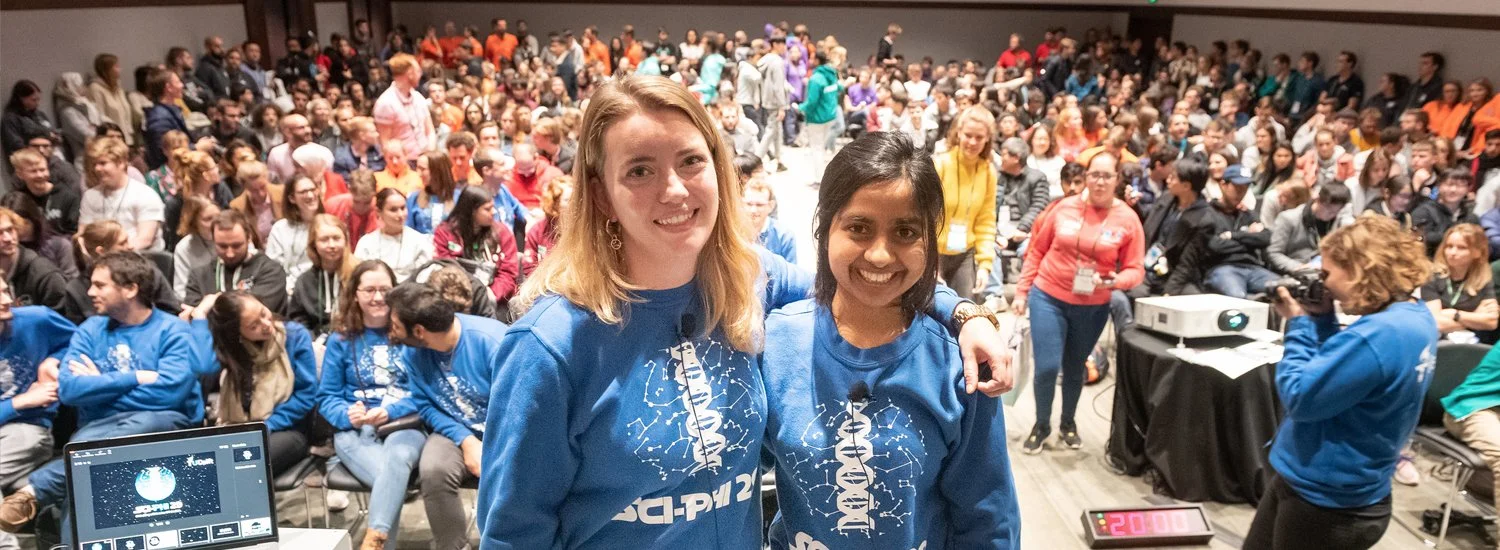
Accessibility is key to iGEM’s new purpose of making sure that the field of synthetic biology, and all of the power that this technology holds, gets developed everywhere by everyone. In this episode of iGEM TV, I interview two special guests – Annika Shi from China and Cibele Zolnier from Brazil – both of whom are part of the iGEM Community’s Open Science & Accessibility Network. Check out this interview where we discuss some of the outstanding iGEM projects from the 2021 Jamboree that focused on accessibility.
The iGEM community is ripe with enthusiastic, innovative and young scientists who have made their mark on this world with their ideas and scientific contributions through their iGEM projects. Each year hundreds of teams provide new perspectives to synthetic biology and showcase their projects in the Jamboree and through publications. Who better than iGEMers to guide and encourage new iGEMers to publish their work?
Thank you to the hundreds of iGEMers, community members, and volunteers who joined last weekend's Opening Day Kickoff event! During the webinar, we covered an overview of this year's Competition requirements, and introduced many core concepts including engineering, safety and responsibility, and human practices. Keep reading for a summary of what was discussed, including links and presentation slides from the meeting.
المشاركة في مسابقة iGEM ليس أمرًا سهلًا. تواجه الفرق عددًا لا نهائيًا من الصعاب خلال رحلة المسابقة، بداية من اكتشاف وحل المشاكل داخل المعمل، اكتشاف أخطاء في كود الموقع الالكتروني الخاص بهم أو حتى حل المشاكل الداخلية بين أفراد الفريق!
参加 iGEM 竞赛并非易事,团队在 iGEM 赛季的前进过程中面临无数障碍,无论是在实验室进行故障排除、克服 wiki 代码中的错误,还是团队内部的人际冲突。尽管无法避免面临这些问题,重要的是要知道你并不孤单,在 iGEM Community 中,我们已经有许多不同的资源能有助于减轻你可能面临的挑战。
There is nothing new about information (info) hazards. We are all familiar with the national security implications of information. Widespread knowledge of certain information can change our risk environment. For example, we keep the precise schedule of our leaders out of the public domain to make it harder for anyone planning them harm to be able to act on it. It is the knowledge of where they will be, when, and what steps we are talking to protect them that poses an information hazard.
Students are not exposed to application-based perspectives until later in their careers. In awareness of this deficit, the iGEM Indian League designed the upcoming High School Workshop, "Synthetase: Synthesize your SynBio Journey" with the goal of providing the principles and skills that future young scientists will need to lay the groundwork and motivate them to pursue careers in this field.
Joining the iGEM Competition is no easy feat, and teams face countless obstacles as they progress through an iGEM season, whether that is troubleshooting in the lab, overcoming bugs in their wiki code, or interpersonal conflicts within the team itself. Even when faced with these issues, it is important to know that you are not alone in your struggles, and here in the iGEM Community, we have generated a number of different resources that will hopefully help to lessen the challenges you may be facing.
Unirse a la competencia iGEM no es algo sencillo, y los equipos participantes pueden enfrentarse a un sinúmero de obstáculos conforme avanzan en la temporada iGEM; ya sea la solución de problemas en el laboratorio, en el código de la wiki, o conflictos interpersonales dentro del propio equipo. Incluso cuando te enfrentas a estos problemas, es importante recordar que no estás solo en estas batallas, y aquí en la iGEM Community, hemos generado una serie de recursos diferentes que te ayudarán a disminuir los desafíos a los que te puedas enfrentar.
Participar da competição iGEM não é coisa fácil, e as equipes participantes podem enfrentar uma infinidade de obstáculos à medida que avançam na temporada iGEM; seja resolução de problemas no laboratório, no código na wiki ou conflitos interpessoais dentro da própria equipe. Mesmo quando você está enfrentando esses problemas, é importante lembrar que você não está sozinho nessas batalhas, e aqui na Comunidade iGEM, reunimos alguns recursos diferentes para ajudar você a diminuir os desafios que você pode enfrentar.
iGEM Competitionに参加することは、簡単なことではありません。iGEMシーズンの期間中、ラボでのトラブルシューティング、Wikiコードのバグの修正、チーム内の人間関係の対立など、数え切れないほどの問題に直面します。このような問題に直面しても、自分たちだけが苦労しているわけではないことを知ることが重要です。iGEMコミュニティでは、皆さんが直面する問題を軽減するのに役立つ様々なリソースを作成しています。
When James Watson, Francis Crick, Rosalind Franklin, Maurice Wilkins, and colleagues published their seminal work on the double helix structure of DNA in 1953, scientists were at a turning point in understanding how genetic material works. Now, just 70 years later, graduate, undergraduate, and even high school students apply their knowledge of how genetic material works to engineer biology itself; using it to address the world’s biggest problems such as climate change, biodiversity, human health, and more.
When you think of India, what comes to mind? Teams from India have a long history of participating in iGEM, known by most as the premier international synthetic biology competition, and the organization that helped to establish the synthetic biology industry. When you think of India, we invite you to think of local people solving local problems throughout every region of India using the tools of synthetic biology. That is the vision of iGEM Indian League.






![[ES] Una guía completa de recursos para los equipos de la competencia iGEM, por la iGEM Community](https://images.squarespace-cdn.com/content/v1/5c0571c05cfd7950e5a84c99/1651037636200-5EIGRFWNQGUDA2M5J47O/31913997238_fe416b932d_k-cropped.jpg)
![[PT] Um guia completo de recursos para as equipes da competição iGEM, pela iGEM Community](https://images.squarespace-cdn.com/content/v1/5c0571c05cfd7950e5a84c99/1651034416583-YEDR8MYEKYPFTEUBFHWR/30845350447_8b776a26e2_k-cropped.jpg)
![[JA] How to have a Grand iGEM Competition experience: Introducing resources from the iGEM Community](https://images.squarespace-cdn.com/content/v1/5c0571c05cfd7950e5a84c99/1651031074611-EXFR7M7528DQ5Y4RG5UF/49055846281_47a61c34f5_o.jpg)

